
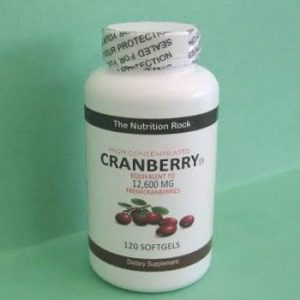
Cranberry EX
120 Softgels
Equivalent to 12,600 mg fresh Cranberries
How To Use
As a dietary supplement, take one (1) to two (2) capsules daily.
Introduction
This fact sheet provides basic information about cranberry—common names, uses, potential side effects, and resources for more information. Cranberries are the fruit of a native plant of North America. These red berries are used in foods and in herbal products.
What Cranberry Is Used For
Historically, cranberry fruits and leaves were used for a variety of problems, such as wounds, urinary disorders, diarrhea, diabetes, stomach ailments, and liver problems.
Recently, cranberry products have been used in the hope of preventing or treating urinary tract infections or Helicobacter pylori (H. Pylori) infections that can lead to stomach ulcers, or to prevent dental plaque. Cranberry has also been reported to have antioxidant and anticancer activity.
How Cranberry Is Used
The berries are used to produce beverages and many other food products, as well as dietary supplements in the form of extracts, capsules, or tablets.
What the Science Says
There is some evidence that cranberry can help to prevent urinary tract infections; however, the evidence is not definitive, and more research is needed. Cranberry has not been shown to be effective as a treatment for an existing urinary tract infection.
Research shows that components found in cranberry may prevent bacteria, such as E. coli, from clinging to the cells along the walls of the urinary tract and causing infection. There is also preliminary evidence that cranberry may reduce the ability of H. pylori bacteria to live in the stomach and cause ulcers.
Findings from a few laboratory studies suggest that cranberry may have antioxidant properties and may also be able to reduce dental plaque (a cause of gum disease).
NCCAM is funding studies of cranberry, primarily to better understand its effects on urinary tract infection. The Office of Dietary Supplements and other NIH agencies are also supporting cranberry research; for example, the National Institute on Aging is funding a laboratory study of potential anti-aging effects.
| Supplement Facts | ||
| Amount Per Serving | ||
Amount | % Daily Value | |
| Vitamin C (ascorbic acid) | 100 mg | 167% |
| Vitamin E (d-alpha tocopherol) | 3 IU | 10% |
| Cranberry Concentrate (Vaccinium macrocarpon) (fruit) (from 12:1 concentrate) (equivalent to 5,040 mg Fresh Cranberries | 420 mg | * |
| *%Daily Value not established. | ||
Other Ingredients: Gelatin, soybean oil, lecithin, glycerin, purified water, magnesium hydroxide, and silica
CAUTION: This product is manufactured and packaged in a facility which may also process milk, soy, wheat, egg, peanuts, tree nuts, fish and crustacean shellfish.
WARNING: KEEP OUT OF REACH OF CHILDREN. DO NOT USE IF OUTER SEAL IS DAMAGED OR MISSING. STORE IN A COOL, DRY PLACE. ALLERGEN WARNING: CONTAINS SOY (LECITHIN)
These statements have not been evaluated by the Food and Drug Administration. This product is not intended to diagnose, treat, cure, or prevent any disease.
SKU: G1345495016
